
You want a tub-to-shower swap that fits Chicago homes and your needs, not a one-size-fits-all makeover. Compare layout options, water-control hardware, and finish choices so the new shower works safely, stays low-maintenance, and matches your household habits.
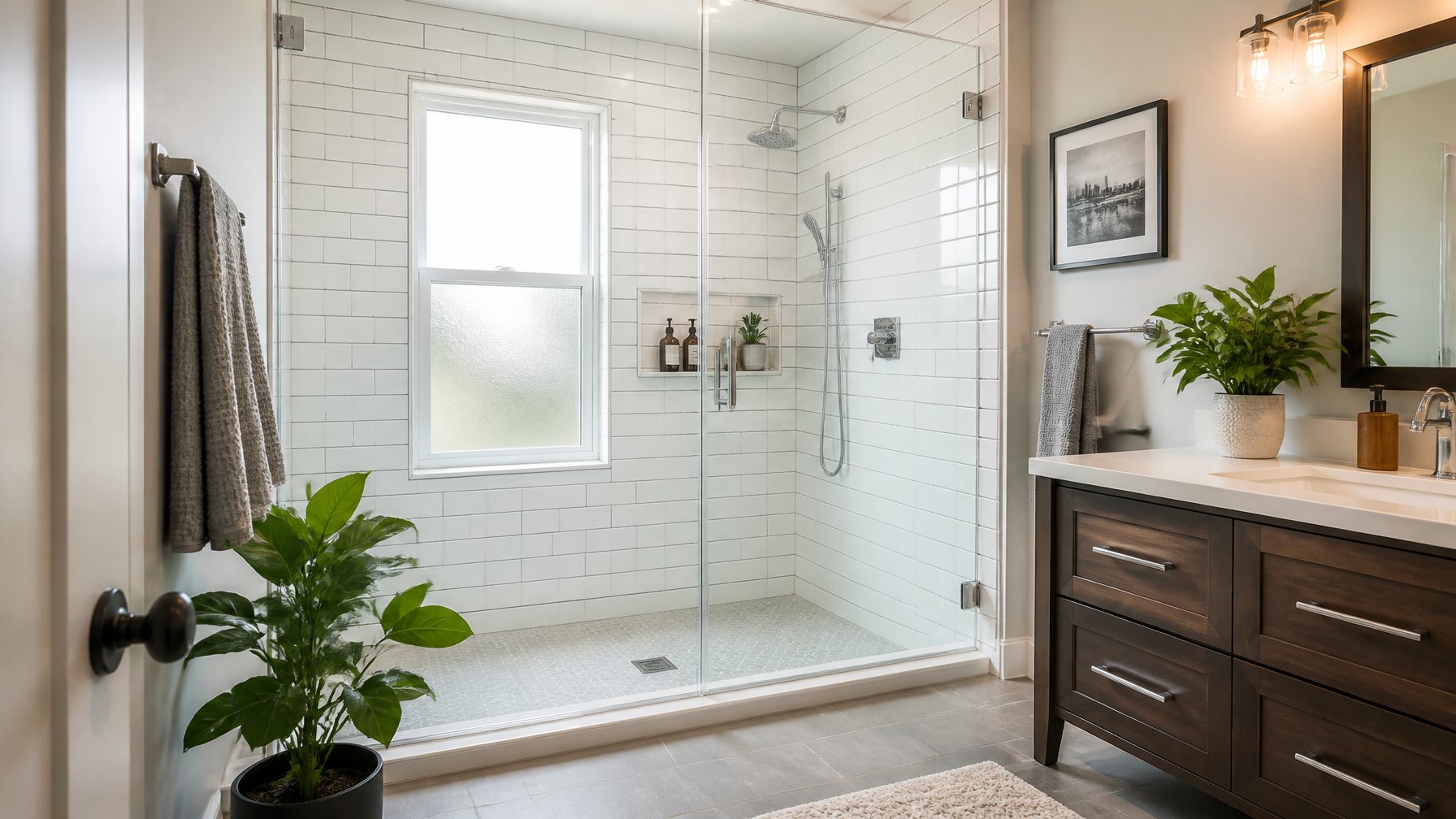
They will explain tradeoffs like curbless vs. low-threshold drains, durable backerboard versus moisture-resistant greenboard, and when to choose a frameless door that meets local code. The guide points to practical questions to ask contractors and what to inspect when weighing estimates and warranties.
1) Glass-framed curbless shower with linear drain
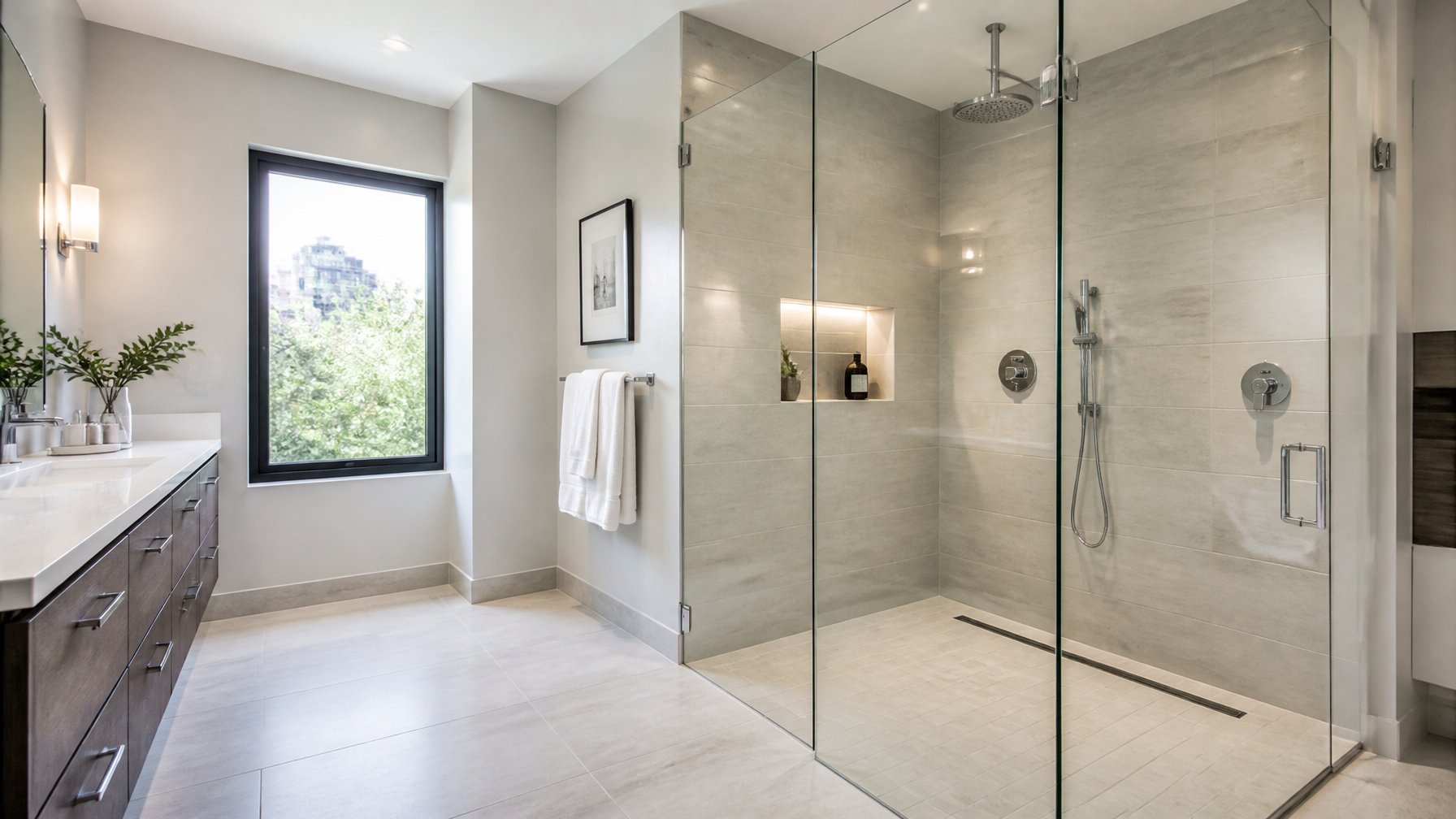
A glass-framed curbless shower opens a small Chicago bathroom and makes cleaning easier. Homeowners should compare glass thickness, frame finish, and the warranty on seals to avoid leaks.
Ask a pro about floor slope and waterproofing details for the linear drain. The tradeoff: a lower threshold looks clean but needs precise waterproofing and sometimes a slightly raised floor structure.
Pick a linear drain style and location early, since it affects tile layout and plumbing runs. They should check drain material, grate finish, and whether the drain ties into the existing waste line or needs a re-route.
For guidance on planning, see the bathroom remodeling service page. Photos should show realistic tiled floors, glass panels, and a slim stainless linear grate.
2) Textured porcelain tile with contrasting grout
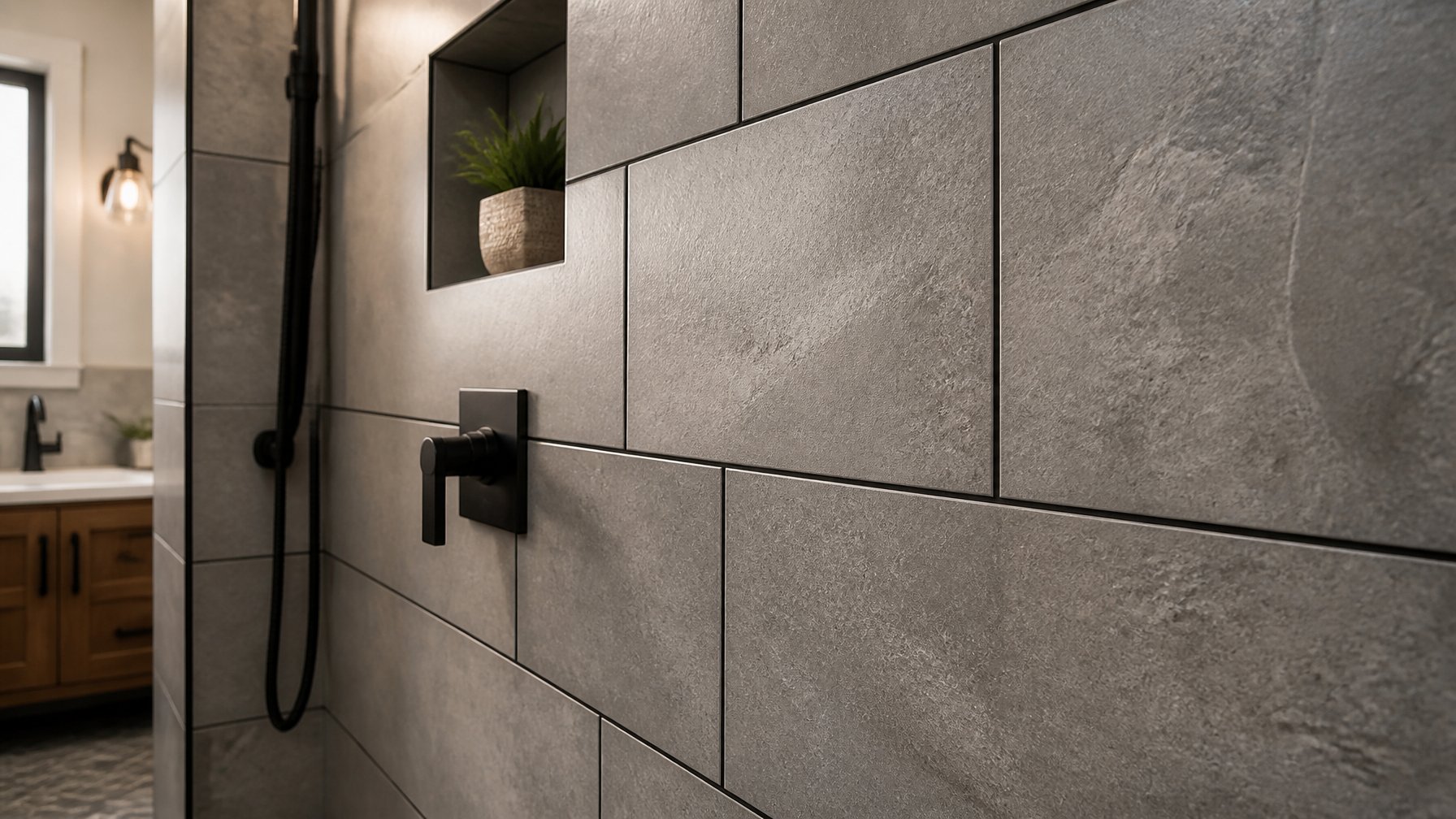
Textured porcelain tile gives a durable, slip-resistant floor for a tub-to-shower conversion. Homeowners should compare PEI ratings and surface finish samples to balance traction with ease of cleaning.
Contrasting grout makes tile patterns pop and hides alignment lines. Ask about grout colorfastness and stain resistance, and weigh darker grout for low maintenance versus lighter grout for a brighter look.
They should check tile size and texture with a mockup before buying. Measure shower slope and drainage needs, and confirm that rough textures won’t trap soap scum in tight grout lines.
For installation, discuss thin-set type and sealing needs with the contractor. See the homepage for general shower remodeling guidance and to find matching services.
3) Walk-in shower with built-in bench and niche
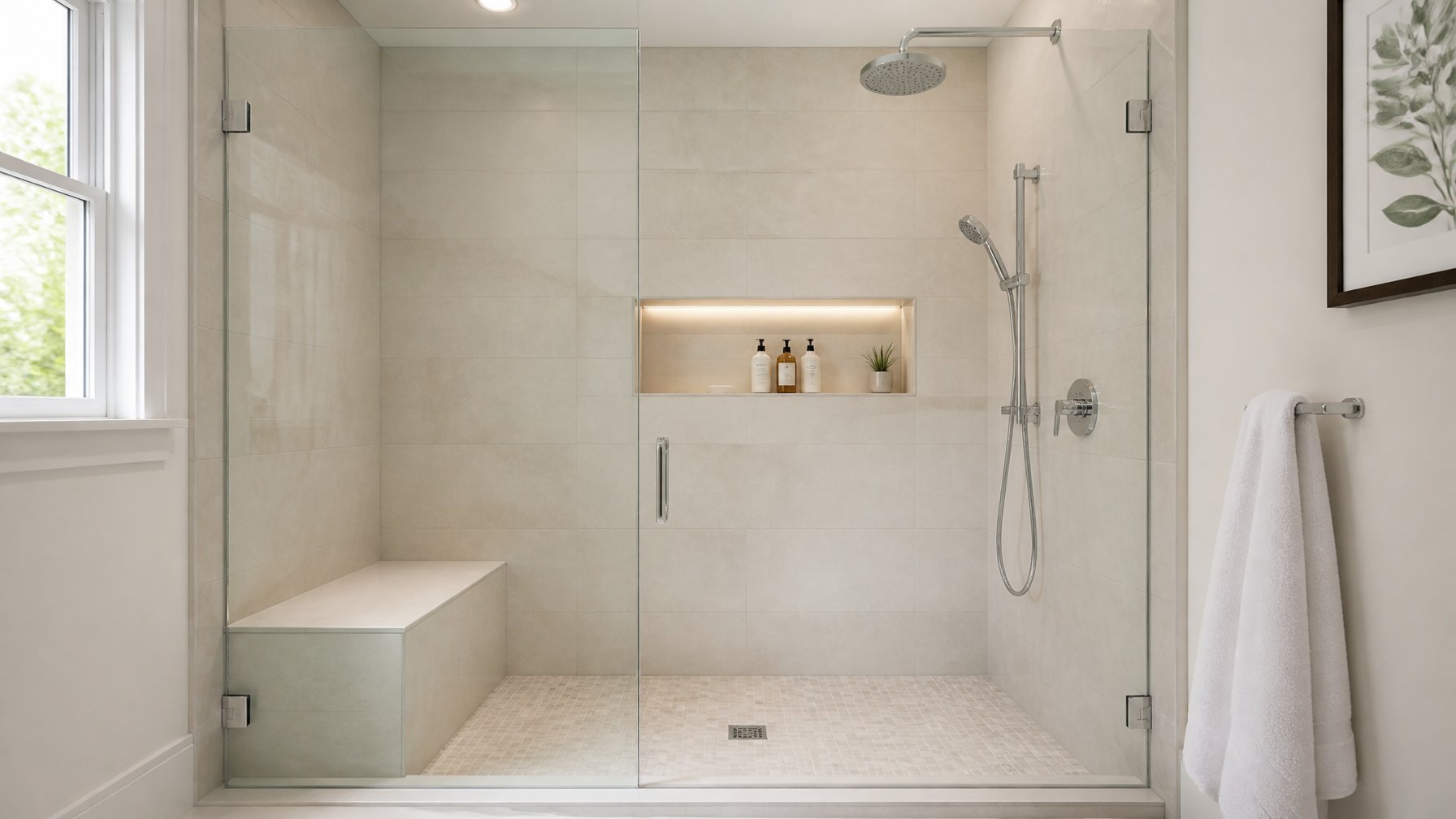
A walk-in shower with a built-in bench and niche gives homeowners a safe, comfortable, and tidy shower area. They should compare tile types for grip and maintenance, and ask about waterproofing methods and curb height to match mobility needs.
Decide bench style: floating, full-width, or fold-down. The tradeoff is space versus accessibility; a full bench is roomy but uses more floor area, while a fold-down saves space but needs sturdy mounting.
Plan the niche size and placement to avoid plumbing conflicts. They should ask contractors about recessed shelving depth, waterproof backer board, and tile edge finish to prevent leaks and make cleaning easier.
Consider glass doors or open entry. Homeowners should compare privacy, splash control, and ventilation, and view a service page like Shower Remodels for layout ideas and common pricing factors.
4) Low-profile single-lever pressure-balanced valve
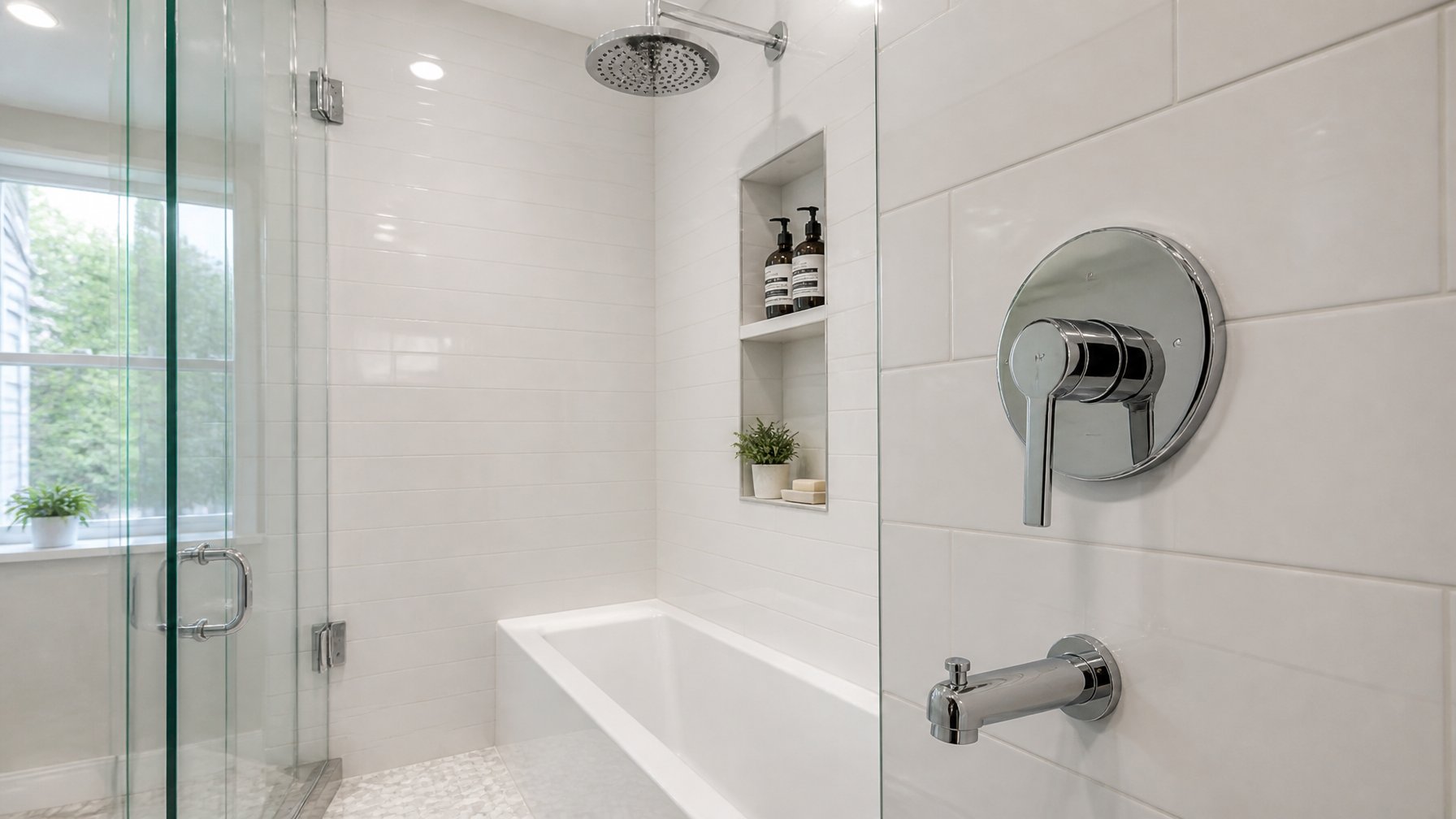
A low-profile single-lever pressure-balanced valve keeps water temperature steady when someone flushes a toilet or runs a tap. Homeowners should compare valve size, cover-plate style, and whether the cartridge is replaceable without opening walls. Ask if the valve includes a temperature limit stop for scald protection.
They should weigh trim style versus valve depth for shallow wall cavities. Request flow rate specs and check for ADA-friendly lever operation. For installation help and matching trims, see the homepage.
5) Frameless clear glass pivot door (Chicago code-friendly)
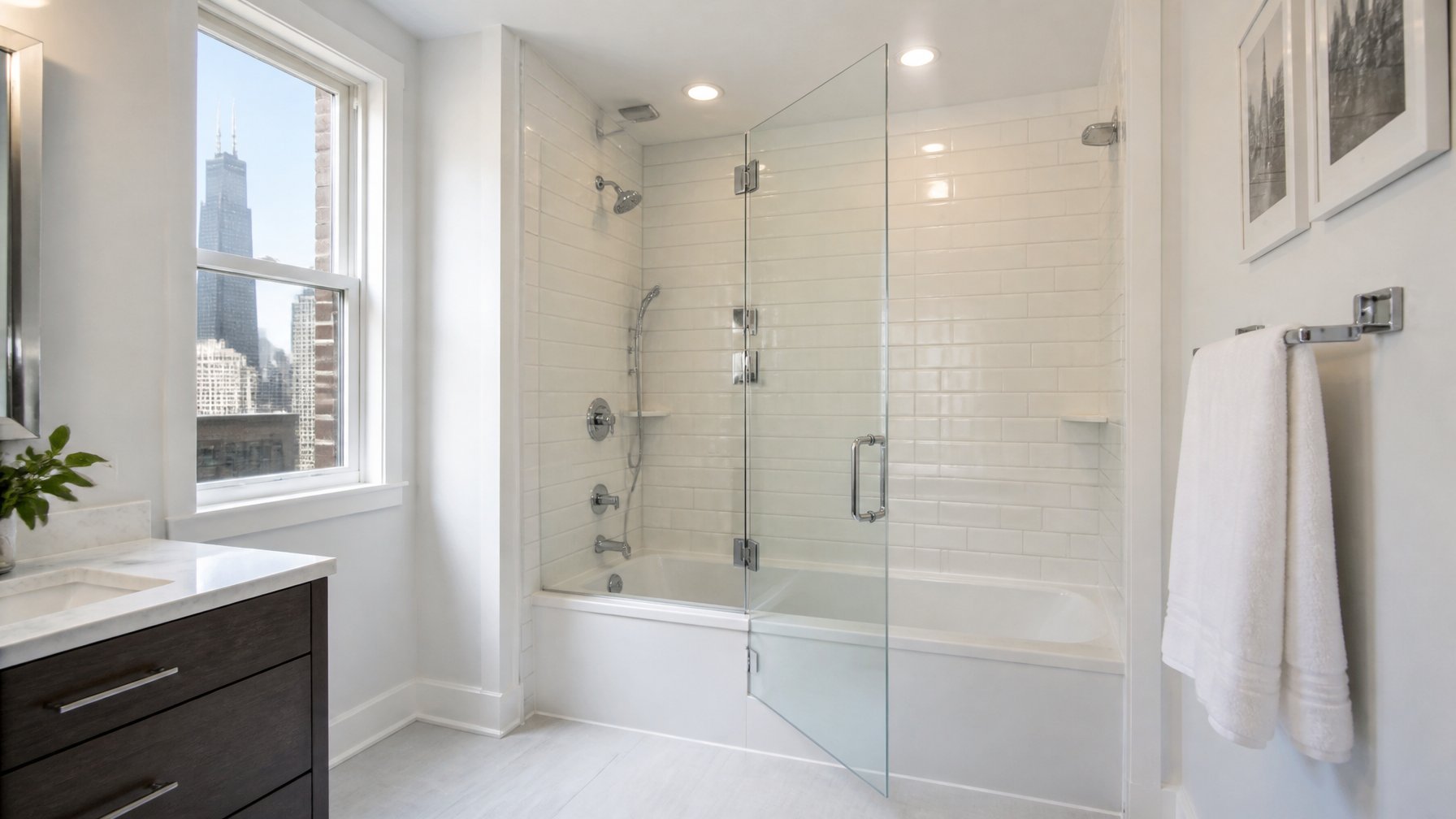
A frameless clear glass pivot door gives a clean, modern look and opens fully without a bulky track. Homeowners should compare glass thickness (3/8" vs 1/2") and hardware finish for durability and water tightness.
Ask if the installer uses a pivot hinge rated for the door weight and for a drip or sweep at the bottom to reduce splashing. The tradeoff: slimmer sightlines but higher upfront cost and need for precise installation.
Confirm the unit meets Chicago plumbing and building codes about water containment and slip-resistant flooring nearby. For help with measurements, timelines, or permit questions, see shower conversion services.
6) Pre-sloped custom shower pan to fit alcove layouts
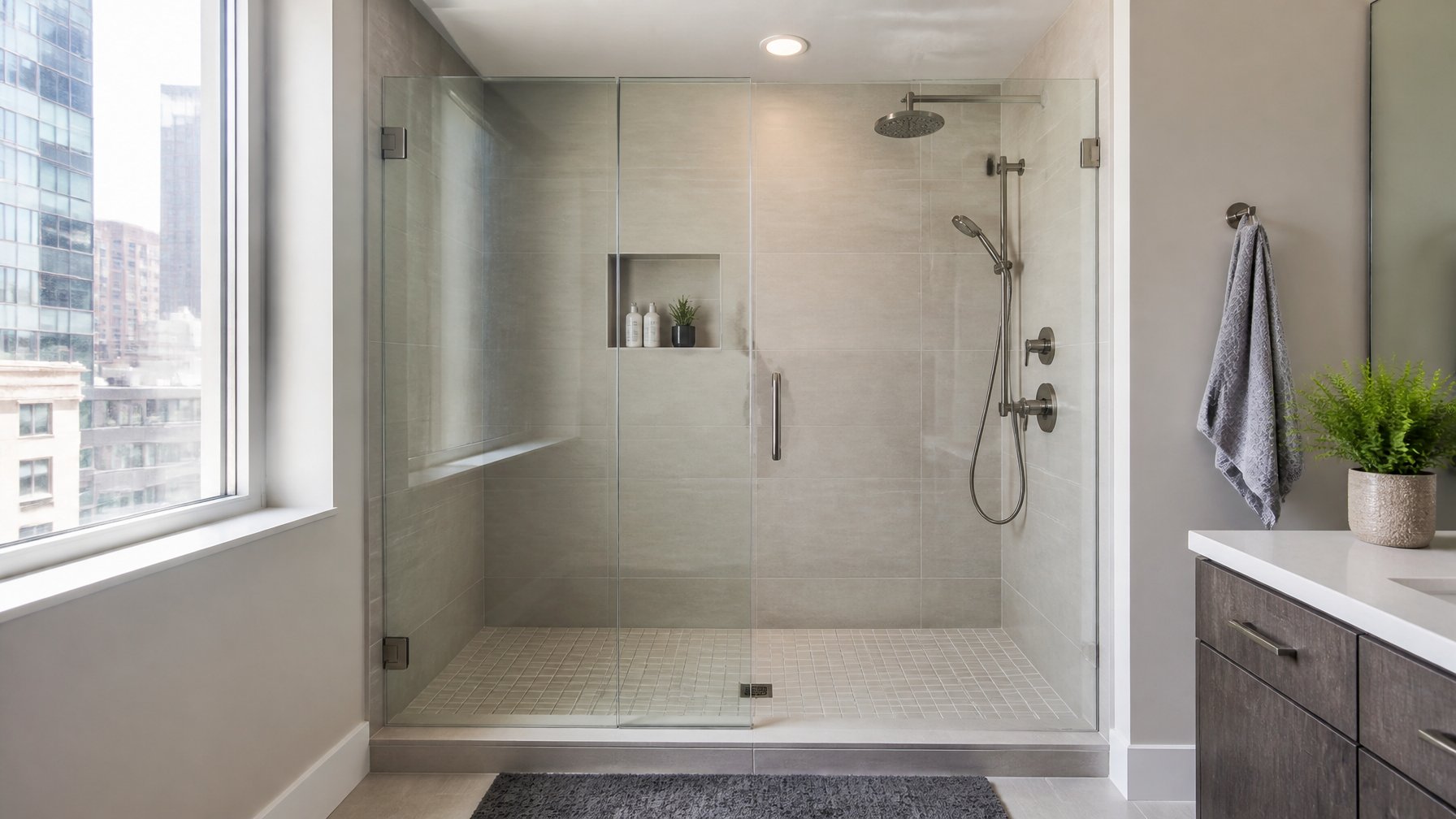
A pre-sloped custom shower pan fits alcove spaces with walls on three sides. Homeowners should compare materials like mortar, foam, and prefab bases for durability and water resistance.
Ask installers whether the pan ties into the existing subfloor and waterproofing plan. The tradeoff is cost versus a perfect fit: custom pans cost more but reduce leak risk and need less on-site modification.
Measure drain location and slope tolerance before ordering. They must confirm the finished threshold height and tile thickness to avoid surprises during installation.
Consider a tile-ready membrane over the pan for easier retiling later. For more info on shower conversions, see the shower conversion services page.
7) MATTE black rain shower head and handheld set
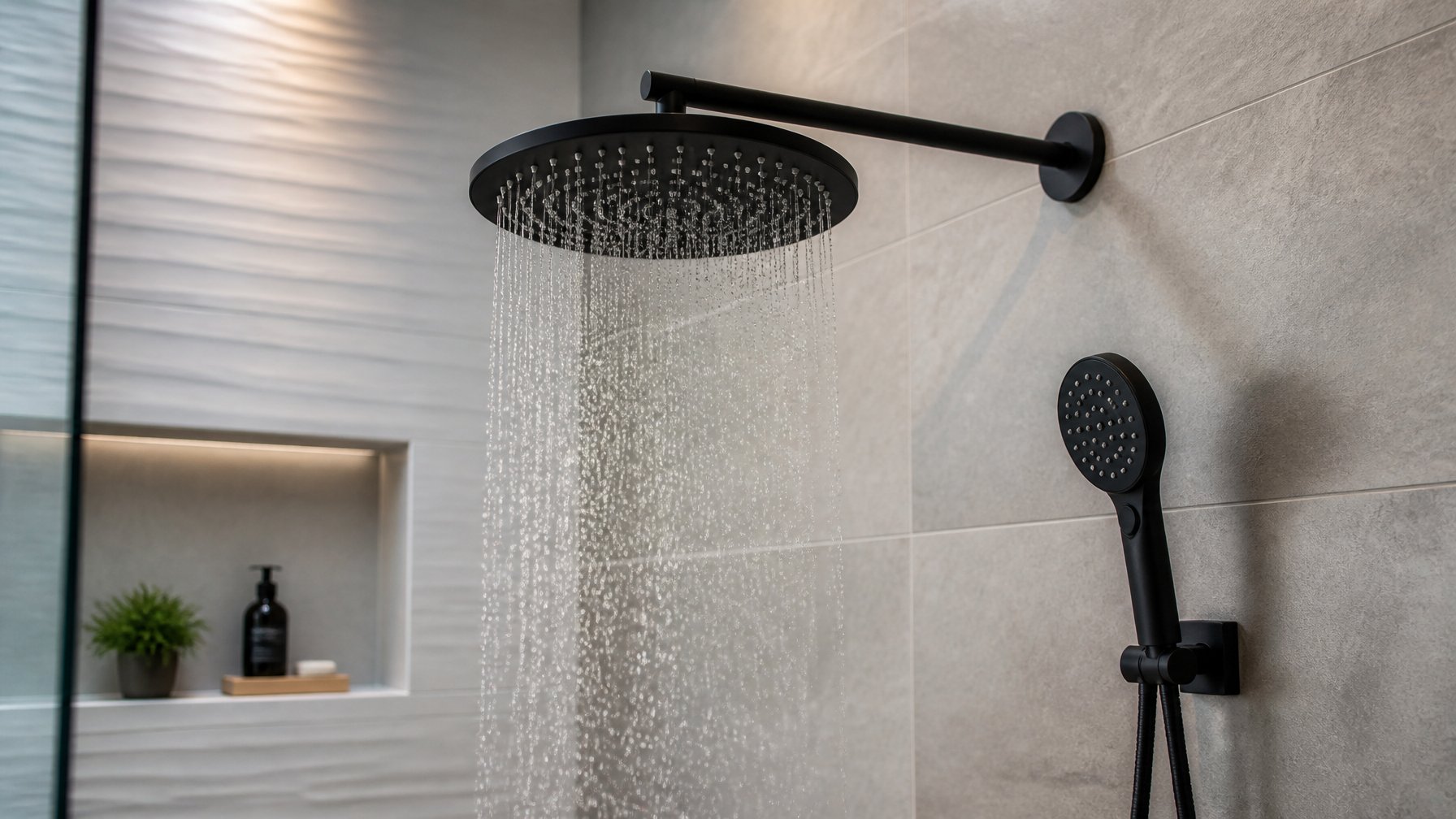
A matte black rain shower head with a matching handheld gives a modern look that hides water spots. Homeowners should compare spray patterns, flow rate (GPM), and finish warranty when choosing a set.
They should ask if the existing plumbing supports a rain head or if a ceiling or wall outlet change is needed. The tradeoff is water coverage versus water pressure; larger rain heads feel luxurious but may need a higher GPM or a pressure-boosting shower valve.
Pick a set with anti-clog nozzles and a solid brass or stainless body for durability. Consider a slide bar for adjustable handheld reach and check compatibility with trim style and tile work.
For installation, measure reach and clearance to avoid splashing outside the shower area. For local help or plumbing services, visit the homepage.
8) Frosted sidelight glass for privacy in rowhouse baths
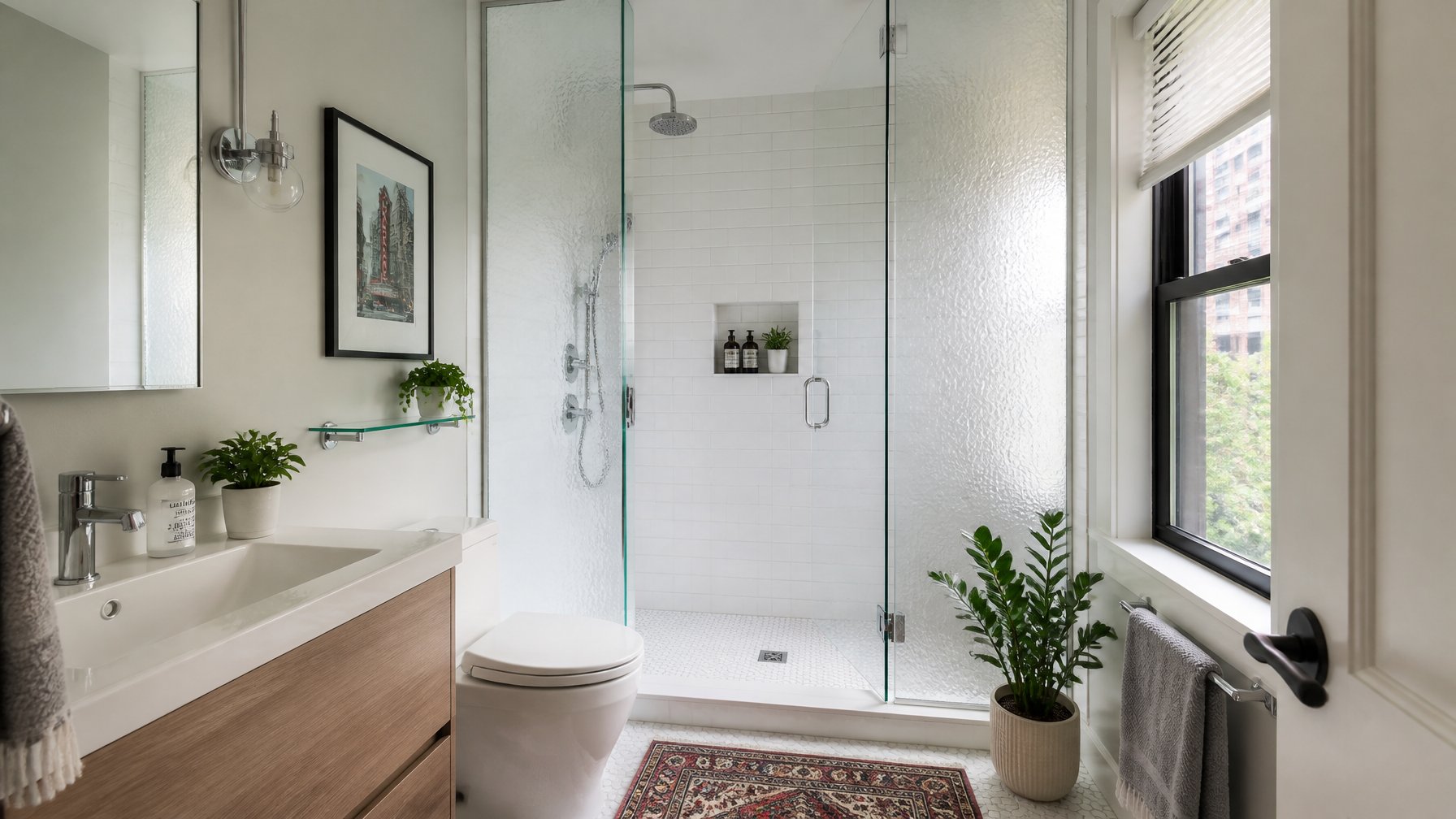
They can swap clear sidelight glass for frosted panels to keep light while blocking sightlines from close neighbors. Homeowners should compare opacity levels and patterns to balance daylight against privacy; ask the glass supplier for samples or mockups.
Consider tempered or laminated glass for safety and city code compliance. They should ask about available thicknesses and whether the frame needs reinforcement when replacing full-height sidelights.
A tradeoff exists between privacy and light diffusion. They can pick etched, sandblasted, or frosted films; films are cheaper but may peel over time, while fused glass lasts longer.
Check how the replacement affects ventilation and cleaning. For a trusted resource on related work, see the homepage.
9) Heated tile floor paired with a thin-profile towel warmer
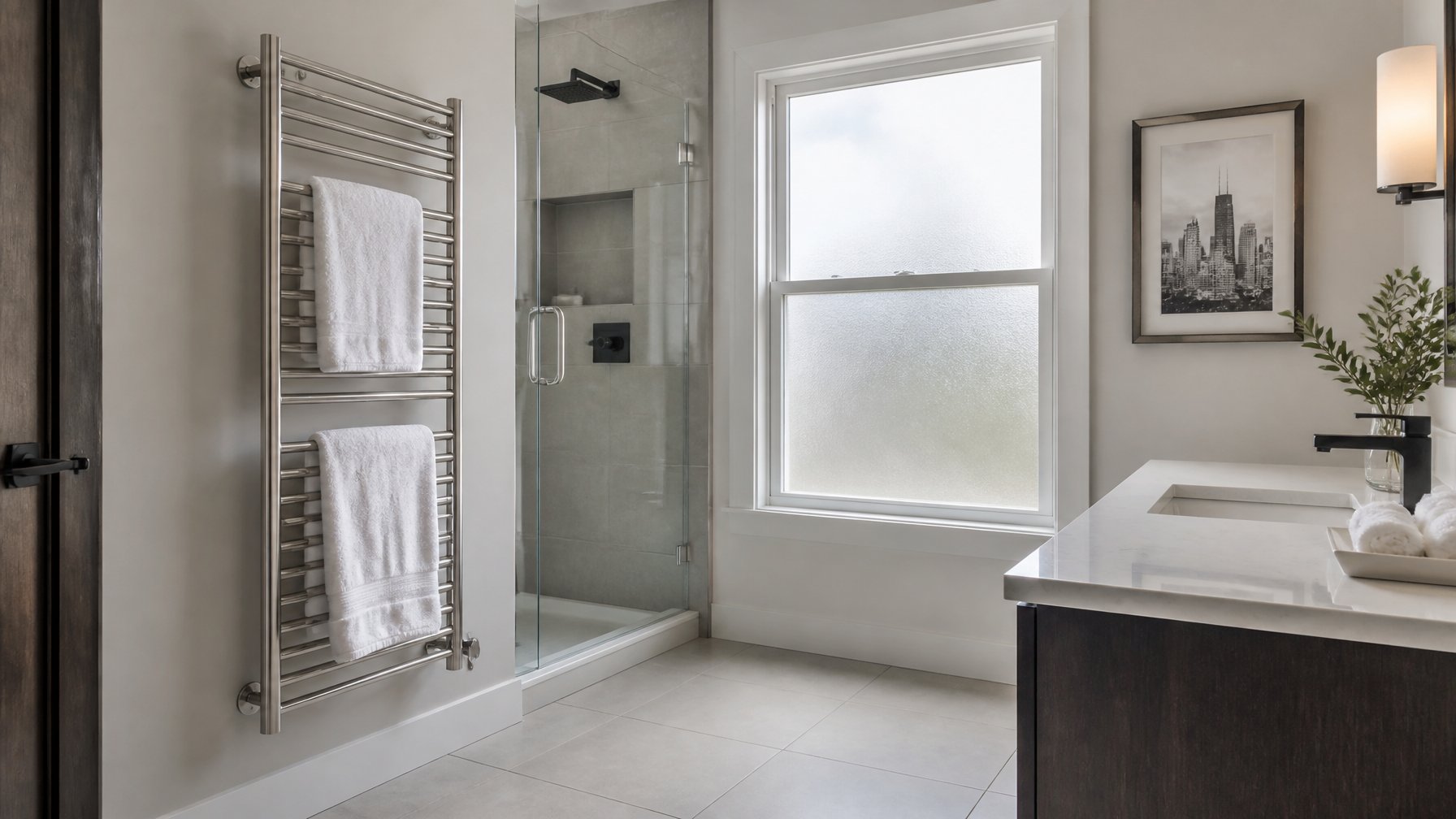
Heated tile adds comfort underfoot and helps dry the floor fast after showers. Homeowners should compare electric mats vs. hydronic systems for cost, installation complexity, and floor height changes. Ask about thermostat placement and energy use.
A thin-profile towel warmer saves space and keeps towels warm without bulky radiators. Compare wattage and wall-mount vs. recessed models, and check clearance needs. Discuss electrical circuit requirements with the electrician.
They should balance comfort with budget: electric mats cost less to install but may raise electric bills slightly. Hydronic systems pair well with whole-house boilers but need more work.
Consider pairing with a slip-resistant tile and a GFCI-protected thermostat. For service options and project planning, visit the bathroom remodeling page.
10) Moisture-resistant greenboard and cement backerboard
They should compare greenboard and cement backerboard for bathrooms. Greenboard resists light moisture and is easier to cut and install. Cement backerboard handles showers and wet walls better but is heavier and needs thinset and mesh tape.
Homeowners should ask which substrate the tile or surround manufacturer requires. They should weigh cost versus durability: greenboard is cheaper, cement backerboard lasts longer under direct water exposure. Also ask about vapor barriers and waterproofing membranes to place over the board.
They should check seam treatment options and fastener spacing. Proper fastening and sealed seams reduce mold risk. For installation help and services, see the bathroom remodeling page.